Douglasville Home Prices, Builder Incentives, and the Resale Market
October 1, 2026
October 1, 2026
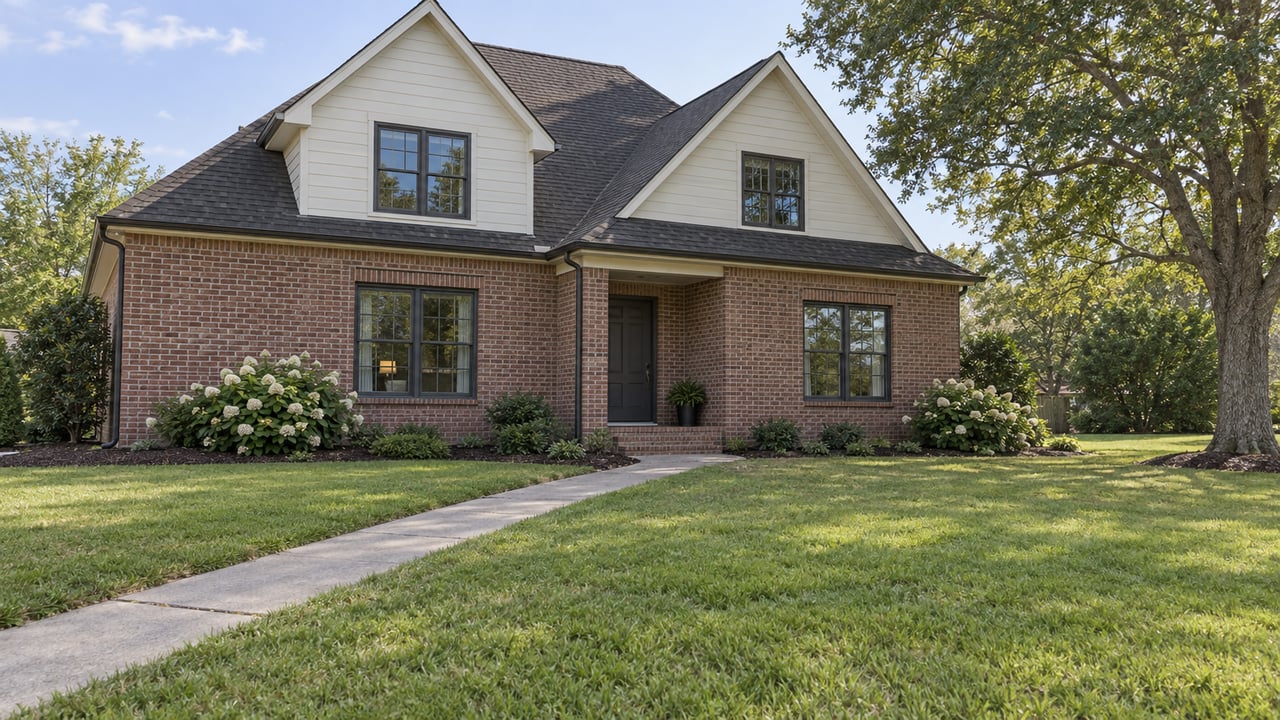
Drive through Tuscany Hills on Douglasville's west side this fall and you'll pass a yard sign advertising a $75,000 builder incentive on a 3,222-square-foot brick ranch with a finished walkout basement. Keep driving two or three streets over and you'll find a resale listing, similar size, similar age of neighborhood, that has been sitting since spring. Same subdivision. Same buyer pool. Very different outcomes.
That contrast is one reason to look beyond a single Douglasville price tracker.
Metro Atlanta's average house price ran to $420,000 in August 2026, up 5.8 percent from a year earlier. Douglasville, twenty minutes down I-20 from downtown Atlanta, is moving in the opposite direction; the new-construction listings offer another point of comparison for buyers.
Ask three different sources what a Douglasville home is worth right now and you'll get three different answers, and the disagreement itself is informative. Sold-price trackers, which measure what buyers actually paid at closing, show real softening. Asking-price trackers, which measure what sellers are requesting, barely moved.
| Tracker | What it measures | Time window | Result |
|---|---|---|---|
| Sold price (three-month) | Median closed sale price | Three months ending May 2026 | $315,000, down 8.7% year over year |
| Home value estimate | Typical estimated value | As of July 2026 | $305,000 to $310,000, down 1.4% to 2.8% year over year |
| Sold price (trailing 30 days) | Median closed sale price | Most recent 30-day stretch | $270,000, down 18.1% year over year |
| Asking price | Median list price | Winter into spring 2026 | Roughly $306,000 to $342,000, essentially flat |
Sellers are still pricing homes as if last year's market held. Closings say otherwise. That gap between what a house is listed for and what it actually sells for, combined with days on market stretching from the mid-50s to the mid-70s over the same twelve months, tells you buyers have leverage that the asking-price number alone doesn't show.
None of this reads like a city losing appeal. It reads like a resale market competing with new construction, a distinction most sold-price headlines don't separate out.
D.R. Horton is currently the most active homebuilder in Douglasville, and it isn't alone. Smith Douglas Homes is selling the Caldwell floor plan at Garrett Preserve. Adams Homes is finishing ranch and two-story plans at Tuscany Hills, several with builder incentives attached directly to the listing price. Stephen Elliott Homes has townhomes moving at the Villages at Tributary. Altogether, roughly 107 new homes were on the market in Douglasville at a median listing price near $384,000, which sits well above the resale median.
That higher sticker price doesn't tell the whole story on its own. The incentives documented on active Douglasville listings this year include a $75,000 price reduction on a Tuscany Hills ranch and a $20,000 incentive on another spec home in the same subdivision, both framed as builder-funded price cuts rather than rate buydowns. A new-construction listing with an incentive is another offer buyers can compare with nearby resale listings.
New subdivisions are one possible part of the explanation for falling sold prices, though these figures don't establish that builder incentives caused the decline. They do give buyers another factor to compare when weighing new homes against resales.
The transaction data add another view of Douglasville's resale market. In May 2026, 81 homes sold in Douglasville, down from 114 the same month a year earlier, a decline of nearly 29 percent in closed transactions. Average days on market over that period ran to 75 days, up from 57 days the year before, a pattern confirmed by a separate tracker showing 74 days in January 2026 against 55 days the prior January.
Fewer sales and longer waits don't tell us whether buyers are taking their time to compare resale listings with builder price cuts or stepping back from the market.
There's a smaller, separate signal worth naming. Recent buyer search data out of Douglasville shows that 16 percent of local home shoppers in the first quarter of 2026 were searching for homes outside the metro entirely, with Chattanooga, Macon, and Orlando as the most common destinations. The other 84 percent stayed within metro Atlanta. That search pattern alone doesn't establish a market in decline; it shows most local shoppers stayed within the metro, where resale sellers and new-construction builders are both trying to win the same buyer.
If the softness were about demand for Douglasville itself, you'd expect civic and private investment to be pulling back. It's doing the opposite.
The city's downtown tax allocation district has funneled more than $9 million into the area since 2019. Ground has broken on a new 46,000-square-foot City Hall, budgeted at $37 million, replacing a building city officials described plainly.
As WSB-TV reported, city officials said, "our current facilities are undersized and aging".
The Town Green project's second phase includes a 257-unit apartment building with 8,000 square feet of retail and restaurant space, backed by $1.5 million in city funding, rising on the site of the old county coroner's office. The Town Green's first phase, the GreyStone Power Amphitheater, already runs a regular event calendar including its Wind Down Wednesdays concert series. A few miles away, Crescent Communities has been developing RENDER Douglasville, a 300-unit apartment community inside The Trails, a 59-acre mixed-use campus built by The Foxfield Co, linked by trails to a 60,000-square-foot commercial village. The Cultural Arts Council of Douglasville and Douglas County, marking its fortieth year of service, has a 94,000-square-foot Arts and Culture Campus in the works downtown, with the state's amended fiscal year 2026 budget including a financial commitment toward the project.
None of that spending depends on resale home prices ticking upward this year. It's a bet on the city over a longer horizon, running in parallel with a resale market where new-construction incentives offer buyers another point of comparison.
If you're shopping resale in Douglasville, the days-on-market number is real leverage. A seller whose home has sat 75 days against a market where new construction down the street is offering five-figure incentives has more reason to negotiate than the list price alone suggests. Ask what comparable new-construction homes actually closed for after incentives, not what they were listed at, before you anchor your offer to a resale asking price that may not reflect where the market has actually moved.
If you're selling, resist pricing off last year's number or off an automated home value estimate that hasn't caught up to what's closing nearby. A same-subdivision comparison that separates incentive-assisted new-construction closings from true resale-to-resale sales will tell you more about your realistic number than a citywide median will.
And if the trade-off between Douglasville's current resale softness and its new-construction incentives doesn't pencil out for your budget, the same west Georgia corridor that includes Douglasville also runs through Villa Rica, Carrollton, and Temple, where different supply conditions apply.
Does a falling median price mean Douglasville is losing value as a place to live? The data doesn't support that read. Resale sold prices have softened against a backdrop of heavy new-construction supply and builder incentives, while the city and private developers continue committing real money to downtown projects with multi-year timelines. Supply competition and civic disinvestment are not the same thing, and only one of them is happening here.
Is now a good time to buy resale in Douglasville? That depends on your specific situation, but the current combination of extended days on market and a wide gap between asking and closed prices means resale sellers have more reason to negotiate than they did a year ago. Compare any resale listing against what new construction in the same subdivision has actually closed for after incentives, not the sticker price, before deciding what a fair offer looks like.
If you're trying to make sense of what a specific Douglasville listing, or a specific incentive offer, actually means for your numbers, that's the kind of comparison worth working through with someone who tracks this market closely. Shawn Self covers Douglasville alongside the rest of west Metro Atlanta and can help you read a given deal against what's actually closing nearby, not just what's listed.
Stay up to date on the latest real estate trends.
Shawn provides trusted real estate guidance with a commitment to exceptional service and results. He helps buyers and sellers navigate every step of the process with confidence and care.